Ataköy 7-8-9-10 Ataköy Towers A Blok Kat 14 No: 169, 34156 Bakırköy/İstanbul
Composite Filling or Ceramic Inlay/Onlay?
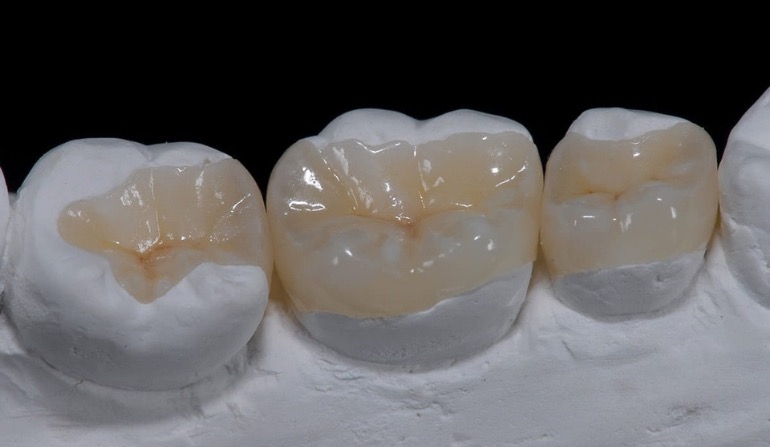
Composite Filling or Ceramic Inlay/Onlay?
There is no universal ranking that makes a composite filling or a ceramic inlay/onlay the best choice for everyone. The decision depends on the amount of tooth tissue lost, the strength of the remaining walls, chewing forces and the conditions for bonding a restoration. The question is broader than “white filling or porcelain?”: the aim is to provide the necessary treatment while preserving tooth tissue that can be retained.
How do composite fillings and ceramic inlays/onlays differ?
Composite is a resin-based restorative material that can be matched to the colour of a tooth. For a direct restoration, the dentist shapes and hardens the material on the tooth. It may be considered for many small and medium-sized defects, although the remaining tooth structure matters as well as the size of the cavity. Keeping the treatment area clean and dry during bonding is an important part of the procedure. [1]
Inlays and onlays are forms of custom-made restoration. An inlay generally replaces tissue within the tooth; an onlay may also cover one or more of its chewing cusps. Restorations described informally as “porcelain fillings” often belong to this group. However, inlays and onlays are not made only from ceramics: these terms describe the shape and extent of a restoration rather than specifying its material. [2]
What does the dentist assess?
A filling that looks small from outside does not necessarily mean that the tooth is equally sound underneath. Examination and any necessary imaging help assess decay, the extent of an existing restoration, remaining walls, possible cracks, contact with the neighbouring tooth and the bite. Ceramic materials also differ from one another; “ceramic” does not describe a single material that behaves identically in every situation. [3]
Useful questions include: What sound tissue can be preserved? Does a weakened cusp need covering? What are the alternatives and limitations of the proposed treatment? Two restorations that appear similar in size may involve different tooth positions, supporting surfaces and bonding conditions. A treatment recommended for someone else is therefore not a direct guide to the most appropriate treatment for your tooth. [4]
How may treatment and aftercare differ?
A direct composite restoration can often be completed in one appointment. A laboratory-made inlay/onlay may require an impression or digital record, a temporary restoration and a separate fitting visit. Suitable cases treated with in-office digital manufacturing may follow a different appointment pattern. Before treatment, ask how many visits are planned and how to protect a temporary restoration if one is needed. [5]
With either approach, the dentist checks the bite and how easily the restored tooth can be cleaned. Some temporary sensitivity may occur. Increasing pain, a distinctly high bite or a broken restoration needs review. Brushing, cleaning between teeth and attending individually planned check-ups remain important regardless of the material. No restoration can be given a guaranteed lifespan. [6]
Does an old filling always need complete replacement?
Staining or a small defect does not automatically require the whole restoration to be removed. Refinishing, polishing or a local repair may be appropriate in selected cases. The decision depends on the cause of the defect, the presence of decay, the condition of the remaining restoration and the outlook for the tooth. Asking whether repair is possible is part of a discussion about avoiding unnecessary loss of sound tissue. [7]
During the treatment discussion, ask why a particular option is recommended and what might change the plan. Share your expectations about appearance, available time and daily care so that the alternatives can also be compared in terms that matter to you.
Frequently asked questions
Is ceramic always better than composite?
No. Appearance, preservation of tissue, chewing forces, practical suitability and future repair are considered together. The material name alone does not identify the right option.
Must a large filling be made from ceramic?
No. The remaining walls and cusps, any cracks and the function of the tooth need assessment. A different partial restoration or a crown may also be considered in some cases.
Can a restored tooth develop decay again?
Yes. A restoration does not eliminate the possibility of new decay. Cleaning the junction between tooth and restoration and managing individual decay risk remain important.
Related information: composite restoration and porcelain filling.
This information is general and does not replace a dental examination, diagnosis or an individual treatment plan.
Sources
- American Dental Association, MouthHealthy — Composite Fillings
- NHS Business Services Authority — Inlays and Onlays
- American Dental Association — Materials for Indirect Restorations
- American Dental Association — Materials for Direct Restorations
- University of Bristol Dental School — Inlays and Onlays
- Healthdirect Australia — Dental Fillings
- FDI World Dental Federation — Repair of Restorations
